
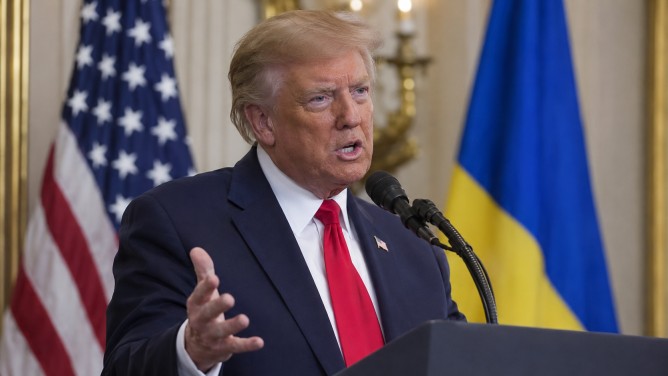
In the ongoing diplomatic tensions surrounding the Russia-Ukraine conflict, former US President Donald Trump has defended his characterization of Russian President Vladimir Putin as a “friend,” underscoring his aim to broker a peace agreement. During a session with reporters in Mar-a-Lago, Florida, on November 26, Trump emphasized that building a working relationship with Putin could facilitate dialogue to end the war in Ukraine.
Trump asserted that his priority was halting the violence, rather than intensifying hostility between global leaders. “We want to make a deal. We want to stop killing. I could say he’s not a friend… I want to make a deal. I got to get a deal done,” Trump stated, highlighting his focus on diplomatic resolutions.
Despite criticism from Ukrainian President Volodymyr Zelensky, who questioned Trump’s friendship with Putin, Trump maintained that open communication channels are essential, even with controversial figures. Zelensky, in an interview published the same day, described Putin as an aggressor and likened Trump’s friendly overtures to maintaining ties with Adolf Hitler during World War II, underscoring the inappropriateness of such a relationship given the circumstances.
Addressing claims of being lenient towards Russia, Trump pointed to the sanctions and economic measures imposed on Moscow during his presidency as evidence of his tough stance. He remained optimistic about Putin’s interest in reaching a peaceful resolution, reiterating his preference for negotiation over confrontation.
The differing perspectives between Trump and Zelensky reflect the broader challenges in international diplomacy, as Washington and Kyiv navigate their approaches to engaging with Moscow and pursuing an end to the conflict. The situation underscores the complexity of international relations, where strategic alliances and peace efforts often intersect with moral and ethical considerations.