
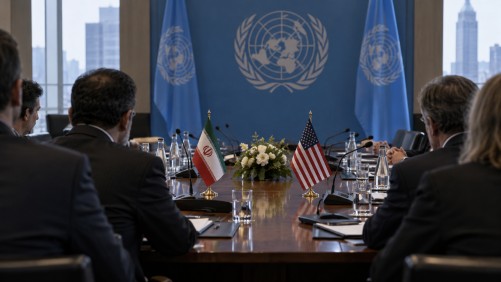
The geopolitical landscape remains tense as the United States and Iran engage in talks amid ongoing regional and international concerns. At the heart of the issue is the strategic Strait of Hormuz, a critical passageway for global oil shipments, which has been a focal point of friction affecting energy markets worldwide.
On the sidelines of the United Nations General Assembly in New York, Iranian officials, including Foreign Minister Abbas Araghchi, met with Steve Witkoff, the U.S. special envoy. The talks, facilitated by Qatari diplomats, lasted three hours and were described positively by Witkoff, who suggested the possibility of future meetings.
A senior Iranian official indicated Tehran’s willingness to reopen the Strait of Hormuz within a week, contingent on the U.S. taking reciprocal actions to reduce military and economic pressures on Iran. This gesture could signal a readiness to return to the negotiating table, provided Washington shows a similar commitment to easing tensions.
Despite these diplomatic overtures, internal divisions persist within Iran regarding engagement with the U.S. Some factions, particularly those aligned with the Islamic Revolutionary Guard Corps, have expressed skepticism about shifting towards negotiations, complicating the prospects for a unified Iranian approach.
In his address to the UN, U.S. President Donald Trump highlighted the critical choice facing his administration: pursuing an agreement with Iran or escalating measures to prevent the nation from developing nuclear weapons. The high-stakes dialogue between Washington and Tehran continues, with regional mediators striving to pave the way for constructive discussions and the possible reopening of the Strait of Hormuz.