
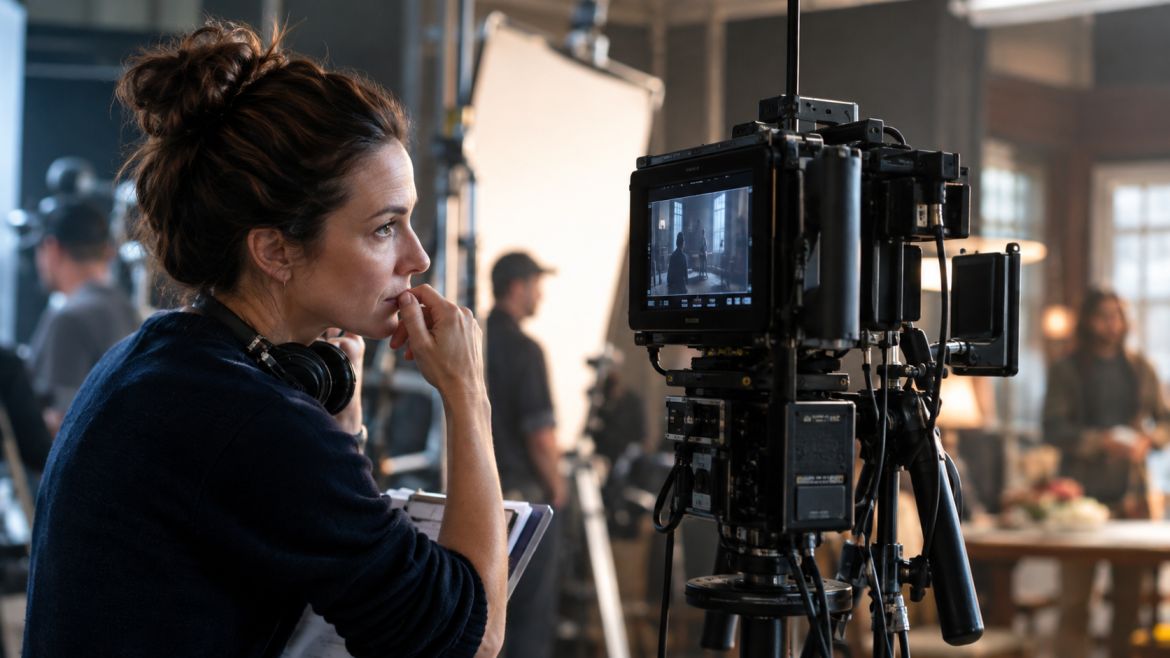
Despite progress in gender representation within the film industry, female directors still encounter considerable obstacles as they attempt to advance their careers beyond their initial projects. This observation was highlighted by Kristy Matheson, director of the London Film Festival, during the announcement of the event’s 2026 lineup, which is scheduled from October 7 to 19. While women helm 109 out of the 251 films, accounting for 43% of the slate, only two of the 21 gala features are directed by women, underscoring the persistent challenges in achieving gender parity.
The issue of gender inequality in filmmaking has been a topic of broader discourse, particularly concerning major festivals. The Venice Film Festival has also faced scrutiny over its representation of female directors, with jury president Maggie Gyllenhaal pointing out the systemic barriers, including limited access to financial resources, that hinder women in the industry. Matheson emphasized that while there is a wealth of promising work from emerging female filmmakers, their presence diminishes as they attempt to produce subsequent films, with a stark drop in representation beyond debut features.
Matheson noted that women are well-represented in short films and debut features, but the numbers dwindle in more prominent festival sections, raising concerns about the opportunities available for women to direct larger-scale productions. This trend is not exclusive to the current year’s selection, as Matheson acknowledged the lack of significant progress over time. She mentioned that the festival could easily populate its Sutherland competition for first-time directors entirely with films by women, reflecting the disparity in opportunities for career advancement.
This year’s festival features a diverse lineup of screen talks with notable figures such as Andrew Scott, Ava DuVernay, and Sofia Coppola. The event will commence with the European premiere of Simon Stone’s “Elsinore,” starring Andrew Scott and Olivia Colman, and conclude with the UK premiere of Jesse Eisenberg’s comedy “The Debut,” featuring Julianne Moore and Paul Giamatti. Both films, according to Matheson, delve into the significance of creative communities and the transformative experiences of their characters.
Community and labor are recurring themes in the festival’s program. Mike Leigh’s “Tender Loving Care” explores the lives of two flatmates working in social care, while Boots Riley’s “I Love Boosters” uses the backdrop of professional shoplifters clashing with a fashion mogul to discuss collective action and unionization. Other films, like “All of a Sudden,” set in a nursing home, address themes of friendship and belonging, emphasizing the role of community in personal connections.