
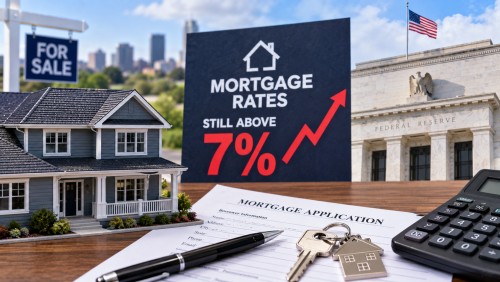
The persistent rise in U.S. mortgage rates, now exceeding 7%, is a significant consequence of the Federal Reserve’s recent decision to increase interest rates. This monetary policy adjustment is part of the Fed’s ongoing efforts to combat inflation, which remains stubbornly above its 2% target.
While mortgage rates are influenced by the Fed’s policy, they do not move in lockstep with the central bank’s rate changes. Instead, they are also shaped by financial markets, investor behavior, and inflation expectations. As of September 17, 2026, the average rate for a 30-year fixed mortgage stood at 7.37%, marking a significant uptick from 5.75% recorded in March. The 15-year fixed mortgage rate was slightly lower, averaging 6.62%.
This increase in rates poses a challenge for prospective homebuyers, who now face higher monthly payments. However, some borrowers might still find opportunities to secure better-than-average rates by leveraging factors like a strong credit score or a substantial down payment. Options such as adjustable-rate mortgages and paying points upfront are available to potentially lower initial costs, although they carry their own risks and additional expenses.
For homeowners considering refinancing, the landscape is equally daunting. The average refinance rate for a 30-year mortgage was 7.41%, with the 15-year refinance rate at 6.75% as of mid-September. Given these high rates, refinancing is less appealing for those with existing loans at much lower rates unless the long-term savings justify the upfront costs.
Looking ahead, the trajectory of mortgage rates will largely hinge on broader economic conditions, inflation trends, and future Federal Reserve policy decisions. While some may hope for a decrease in rates, there is no certainty that waiting will necessarily lead to lower borrowing costs.