
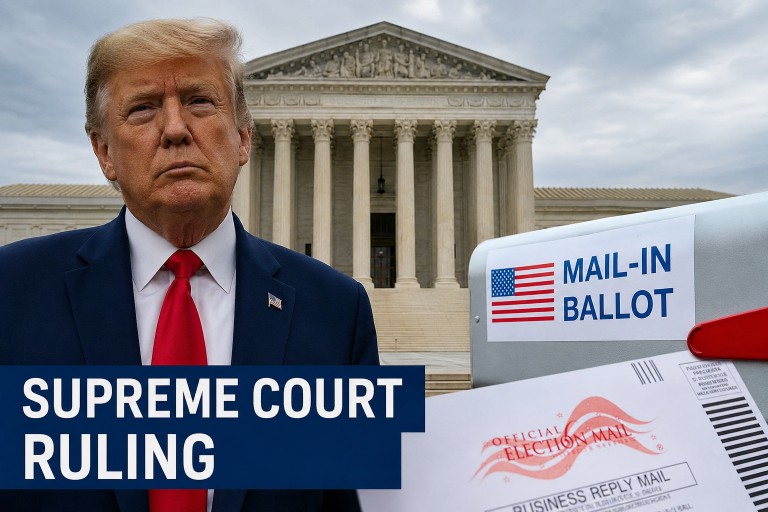
The US Supreme Court has recently granted the Trump administration permission to proceed with certain elements of its executive order focused on mail-in voting. This development comes after the court lifted an injunction imposed by a lower court. In a 6-3 decision, the justices nullified one of the injunctions that had previously obstructed the order. However, it is important to note that a separate injunction with nationwide implications remains in effect, and additional legal disputes are anticipated in the future. The Supreme Court clarified that its ruling does not assure the legality of future actions taken under this executive directive.
This executive order from the Trump administration mandates the creation of a citizenship list of eligible voters and implements new guidelines concerning the distribution of mail-in ballots, as well as the enforcement of federal election regulations. The order has faced strong opposition from states led by Democrats, who argue that the Constitution primarily entrusts the responsibility of overseeing election procedures to states and Congress. Critics of the order have expressed concerns that the proposed changes, especially so close to the November midterm elections, might disrupt preparations for voting and potentially impede voter access.
The Supreme Court’s decision effectively allows the administration to continue its work on these policies as the larger legal contest regarding the executive order unfolds. While the ruling lifts one of the legal barriers, the broader issue of the order’s constitutionality remains unresolved, leaving open the possibility of further legal challenges. The balance between federal and state control over election processes is at the heart of this contentious issue, with significant implications for the forthcoming elections.
Democratic-led states have been at the forefront of contesting the executive order, emphasizing the potential risks it poses to the integrity and accessibility of the electoral process. They maintain that any alterations to the established voting procedures should be carefully evaluated, especially given the proximity to major elections. The outcome of this legal battle could have wide-ranging effects on how elections are conducted and the level of federal involvement permitted in state-managed electoral affairs.