
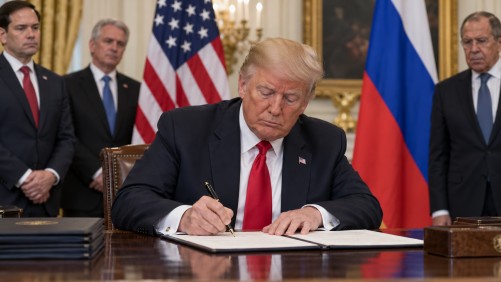
In a recent move that has sparked debate, U.S. President Donald Trump has decided to waive significant sanctions and tariffs against Russia, actions that were initially set to be enforced under the Lindsey O. Graham Sanctioning Russia and Iran Act of 2026. Signed into law last month, this legislation aimed to tighten economic restrictions on Moscow in light of its ongoing invasion of Ukraine. The executive order issued by Trump on Friday cites the national interests of the United States as the reason for suspending these measures.
The waived sanctions and tariffs included imposing penalties on countries that assist Russia in circumventing current sanctions and authorizing tariffs up to 100% on imports from significant buyers of Russian oil and natural gas. The waiver will remain effective until Trump or other authorized officials decide that further action is needed, with the law allowing the President to suspend the measures provided Congress is notified that doing so serves the national interest.
Trump’s decision comes amid rising criticism over his administration’s stance on Russia and Ukraine, with detractors highlighting what they perceive as a lenient approach towards Moscow and tensions in relations with Ukrainian President Volodymyr Zelenskyy. Democratic lawmakers have expressed concerns that waiving the sanctions undermines efforts to hold Russia accountable for its actions in Ukraine, potentially impacting Moscow’s energy revenues and access to international markets.
The proposed sanctions had also raised apprehensions in countries like China and India, major importers of Russian oil. Both nations had voiced concerns about how additional U.S. restrictions might affect global trade and bilateral relations.
This suspension follows a contentious agreement involving a diesel supply arrangement with Russia, which Trump defended as a measure to boost fuel supplies and alleviate global energy prices. Critics, however, have questioned whether this arrangement might inadvertently bolster Russia’s financial position.
As the waiver leaves the timing and implementation of new sanctions and tariffs uncertain, the U.S. continues to navigate the delicate balance of applying pressure on Russia while considering the implications for energy costs and international economic relations.