
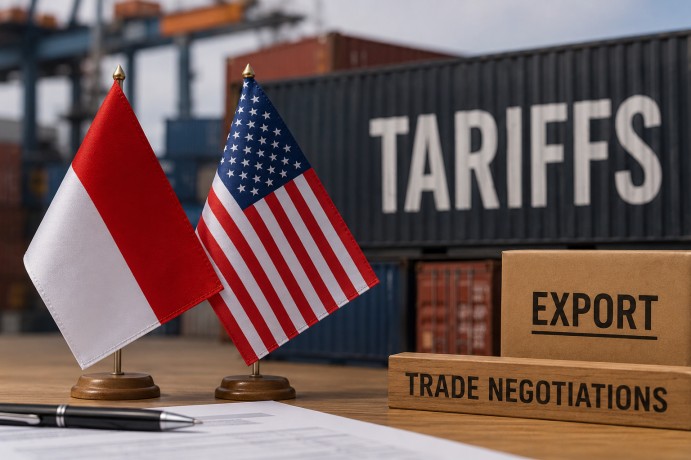
Indonesia is actively seeking assurance from the United States regarding the honoring of previously agreed tariff exemptions on its crucial exports, following the recent imposition of a new 10% U.S. tariff. The U.S. introduced these latest tariffs to address concerns over forced labor enforcement and included Indonesia among the nations subjected to this lower levy. Indonesian officials have emphasized their ongoing communication with U.S. trade authorities, expressing hope that existing trade agreements will continue to ensure duty-free access for significant exports such as crude palm oil, cocoa, coffee, and natural rubber.
In addition to the tariff concerns, Indonesia is also awaiting the results of a separate U.S. investigation focused on structural excess capacity, which could potentially lead to further trade measures. The Indonesian government has committed to continuing negotiations aimed at securing competitive tariff rates to safeguard its export market. The continuation of these negotiations underscores Indonesia’s proactive efforts to maintain favorable trade relations amid shifting U.S. trade policies.
Furthermore, the new U.S. trade policy extends preferential treatment to certain Indonesian textile exports that incorporate U.S. cotton and other American components, providing a strategic advantage for these products. This aspect of the policy highlights a collaborative angle in the trade relationship, despite the broader challenges posed by the tariffs.
Economic data reveals that Indonesia’s trade with the United States was substantial in the early months of 2026, with bilateral trade reaching $18.4 billion in the first five months alone. Indonesia managed to achieve a trade surplus of approximately $7 billion during this period, reflecting the importance of maintaining robust trade ties with the U.S. as a critical economic partner.