
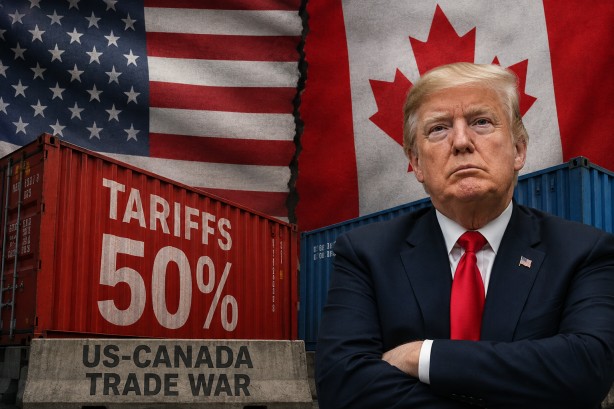
The trade conflict between the United States and Canada has intensified as President Donald Trump has imposed 50% tariffs on approximately $20 billion worth of Canadian goods. This development follows the breakdown of negotiations between the two nations in Washington. Among the targeted Canadian exports are items such as hockey sticks and medical supplies. In response, Canadian Prime Minister Mark Carney has pledged to implement equivalent tariffs on United States products, promising to match the US measures “dollar for dollar” starting September 8.
Prime Minister Carney has characterized the US tariffs as a direct assault on Canada, making it clear that his government will not acquiesce to the demands presented during the negotiations. Meanwhile, US Trade Representative Jamieson Greer has justified the imposition of tariffs as a necessary step to safeguard American workers and maintain the integrity of supply chains. This standoff underscores the growing tensions between the two countries over trade policies.
The escalation of the trade dispute has cast a shadow over the future of the United States-Mexico-Canada Agreement (USMCA), which governs nearly $2 trillion in annual trade among the three nations. The uncertainty surrounding the agreement has sparked concerns about potential economic repercussions, including increased costs for businesses and consumers on both sides of the border.
The strained economic ties between the United States and Canada are now at risk of further deterioration. The imposition of tariffs and the potential for retaliatory measures could lead to a more complex and contentious trade environment, affecting industries and markets tied closely to cross-border commerce. As both governments brace for the impact of these measures, stakeholders are left to navigate an increasingly challenging landscape.