
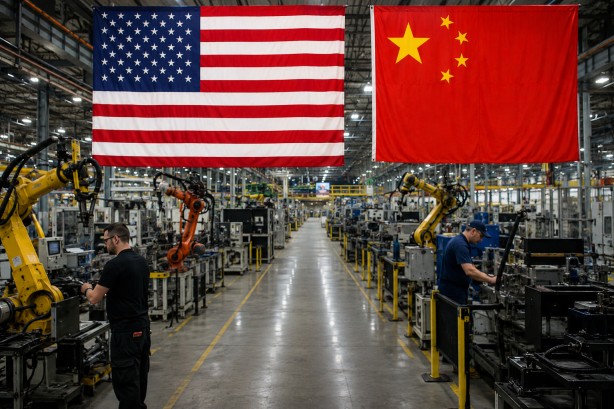
A group of Democratic lawmakers is pushing forward a plan to create an Industrial Bank for American Manufacturing, targeting an increase in domestic production while providing critical support to small and medium-sized manufacturers throughout the country. Designed to invigorate the manufacturing sector, the proposed legislation seeks to allocate up to half of the revenue collected from tariffs on Chinese imports, up to a limit of $15 billion each year, into a specialized fund. This fund would be utilized to offer grants, low-interest loans, and equity investments to companies aiming to expand their manufacturing operations within the United States.
Representative Ro Khanna, a leading sponsor of the bill, has characterized the proposal as a landmark industrial development strategy, one of the most ambitious in recent history. The main objective is to revitalize manufacturing in areas that have been hit hard by factory shutdowns and a general decline in industrial activity, while simultaneously lessening the nation’s dependence on imported goods. The initiative seeks to restore economic vitality to regions affected by industrial downturns, providing a pathway for rejuvenation and self-sustainability.
Under the terms of the proposal, the bank would impose a $500 million cap on individual loans, with any loans surpassing $100 million requiring congressional approval. Advocates of the plan argue that it would stimulate investment in domestic manufacturing sectors, generate employment opportunities, and fortify the United States’ manufacturing infrastructure. The initiative is positioned as a strategic response to ongoing global competition, aiming to rebuild the nation’s industrial capabilities.
This legislative effort emerges at a time when U.S. manufacturing employment figures remain significantly lower than their historical peaks. Lawmakers are actively seeking innovative methods to invigorate industrial growth, recognizing the critical need to adapt and compete on the global stage. By channeling resources into domestic manufacturing, the proposal envisions a stronger, more resilient industrial base for the future.