
A recent study highlights the potential beyond fitness improvements that regular physical activity can offer, namely reducing the risks of stroke and premature death. This research delved into the long-term impacts of physical activity, focusing on individuals with and without atrial fibrillation (AFib)—a prevalent heart rhythm disorder characterized by irregular heartbeats. Over a span of roughly 13.5 years, researchers monitored participants to assess how varying physical activity levels corresponded with stroke incidence and overall mortality rates.
The study’s results underscore that even minimal physical activity can yield significant health advantages. Participants who engaged in regular physical activity exhibited up to a 19% reduction in stroke risk and a 22% decrease in mortality from any cause, compared to their less active counterparts. This correlation was particularly pronounced among individuals with AFib, who showed improved life expectancy in relation to their activity levels.
For those living with atrial fibrillation, the benefits of physical activity can be crucial, as the condition often heightens the risk of blood clots and subsequent strokes. According to the research, people with AFib could potentially extend their lives by 0.50 to 1.15 years, contingent on their level of physical activity. Specifically, individuals with low activity levels gained about 0.50 years, while those engaging in moderate activity saw an increase of around 0.66 years, and higher activity levels were linked with up to 1.15 additional years of life.
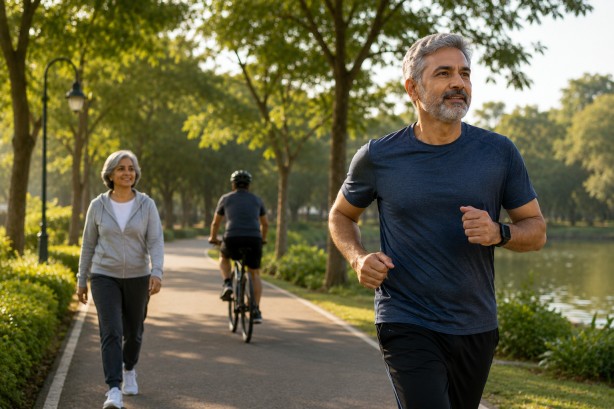
Importantly, the study reinforces that achieving these health benefits does not necessitate intense exercise regimes or long-distance running. Engaging in activities such as walking, cycling, swimming, or even routine household chores can contribute significantly to a more active lifestyle. The essential takeaway is to minimize extended periods of inactivity and gradually incorporate more movement into daily routines.
Overall, the findings advocate that even moderate physical activity is preferable to a sedentary lifestyle, and that elevating one’s activity level can further enhance health outcomes and longevity.