
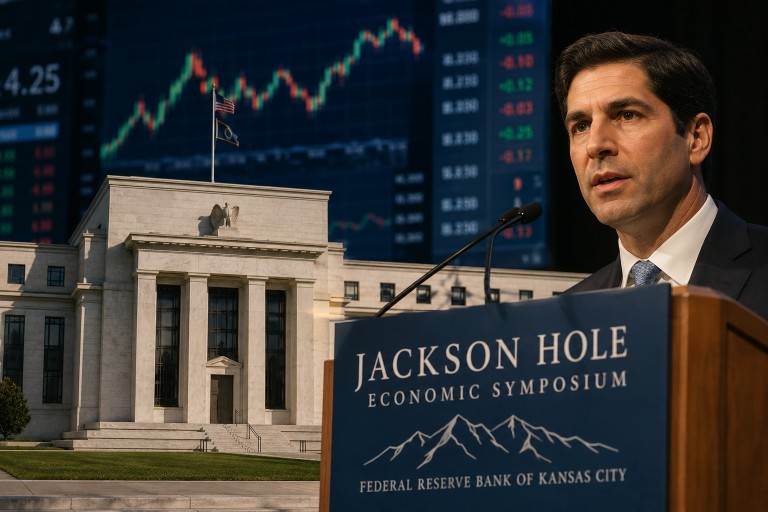
As financial markets await Federal Reserve Chair Kevin Warsh’s speech at the Jackson Hole symposium, investors are keen to gain insights into the future trajectory of interest rates, inflation control, and the influence of climbing Treasury yields on monetary policy. Warsh has shifted away from offering detailed forward guidance, instead urging investors to pay closer attention to market indicators. This shift has contributed to increased uncertainty regarding the Federal Reserve’s strategy for managing inflation, which continues to exceed the 2% target.
The rise in long-term Treasury yields has further muddled the economic outlook, with some investors arguing that higher yields are already exerting a tightening effect on financial conditions. This dynamic could potentially lessen the necessity for additional interest rate hikes. The issue gained prominence after the U.S. Treasury heightened its buybacks of long-term bonds in the wake of a recent market sell-off. Although officials described this action as a move to enhance market liquidity, investors interpreted it as a measure to alleviate pressure on long-term borrowing costs.
In light of these developments, market participants are eager for Warsh to offer a more definitive stance on how the Federal Reserve plans to steer inflation back to its 2% goal and whether more rate increases might be on the horizon. The anticipation surrounds Warsh’s upcoming Jackson Hole address, where many hope he will clarify the Federal Reserve’s monetary policy direction and expound on the interplay between bond market conditions and the central bank’s decisions.
Investors are particularly interested in discerning how the Federal Reserve intends to navigate the complexities posed by rising Treasury yields and persistent inflation. Warsh’s speech is expected to provide crucial signals that could either reinforce or recalibrate market expectations concerning future policy moves. As such, the address will be a pivotal moment for stakeholders seeking to understand the evolving landscape of U.S. monetary policy.