
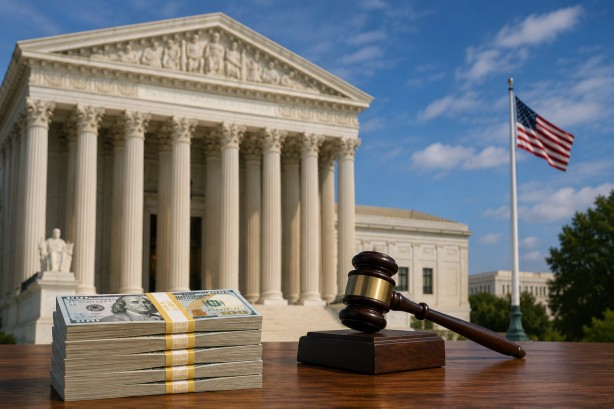
The United States government has been compelled to refund $81 billion in tariffs to businesses following a Supreme Court ruling that deemed a substantial portion of tariffs imposed during Donald Trump’s presidency as unlawful. These refunds, distributed in the current fiscal year, mark a significant rise compared to the $5 billion returned in the same timeframe last year. The court’s decision mandated the reimbursement of import duties paid by companies under the now-invalid tariffs, with the majority of refunds processed in May and June, according to data from the Treasury’s budget.
This considerable refund has exacerbated the federal budget deficit, which ballooned to $1.367 trillion over the first nine months of the fiscal year. The deficit expansion is further compounded by surging interest payments on the national debt and increased military expenditures, underscoring the challenges facing the government’s fiscal management.
Despite the legal setback, the Trump administration is actively pursuing the implementation of a new series of tariffs targeting international trade practices, industrial overcapacity issues, and enforcement of anti-forced labor regulations. These proposed tariffs are expected to come with rates ranging from 10% to 12.5%, and additional duties are being considered for several prominent trading partners.
The strategic move to introduce fresh tariffs highlights the administration’s continued focus on addressing perceived trade imbalances and labor rights concerns. However, the recent Supreme Court decision and the subsequent financial repercussions underscore the complexity and potential pitfalls of aggressive tariff strategies.